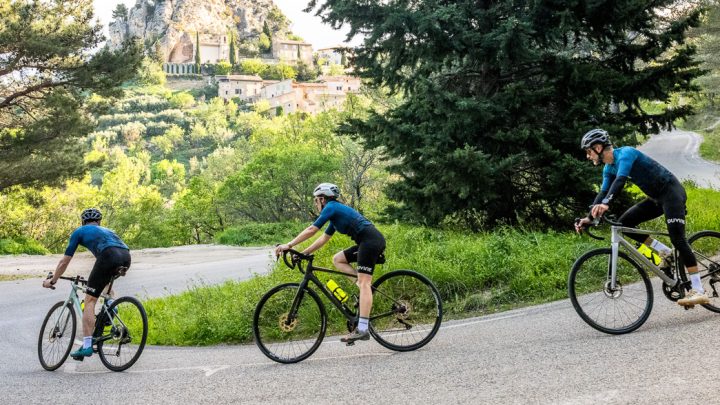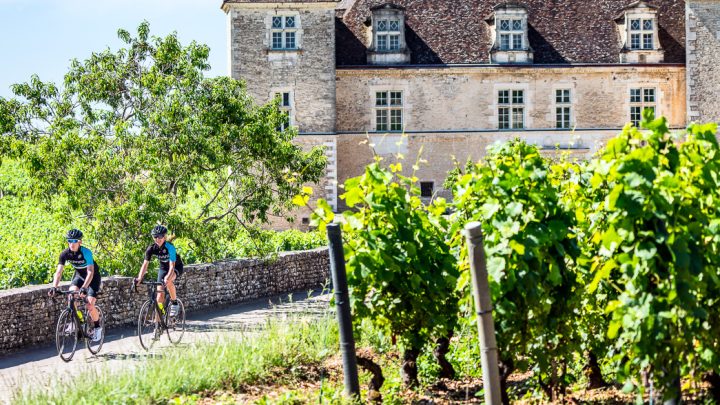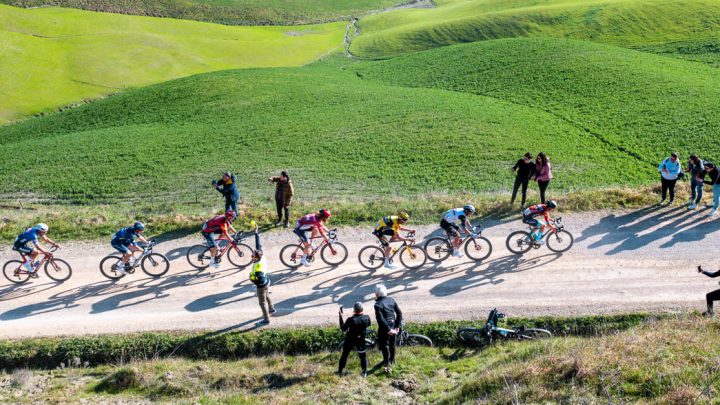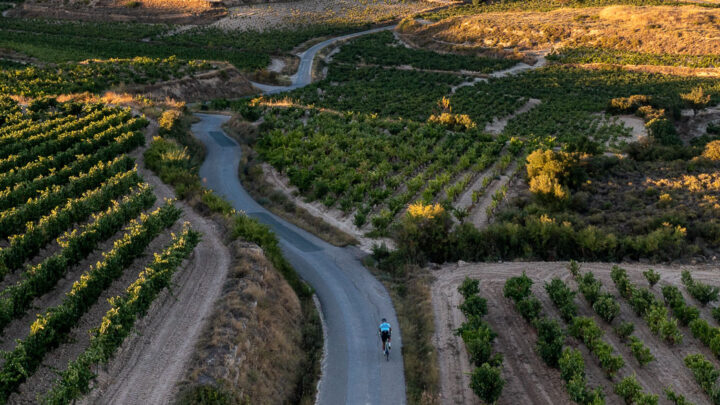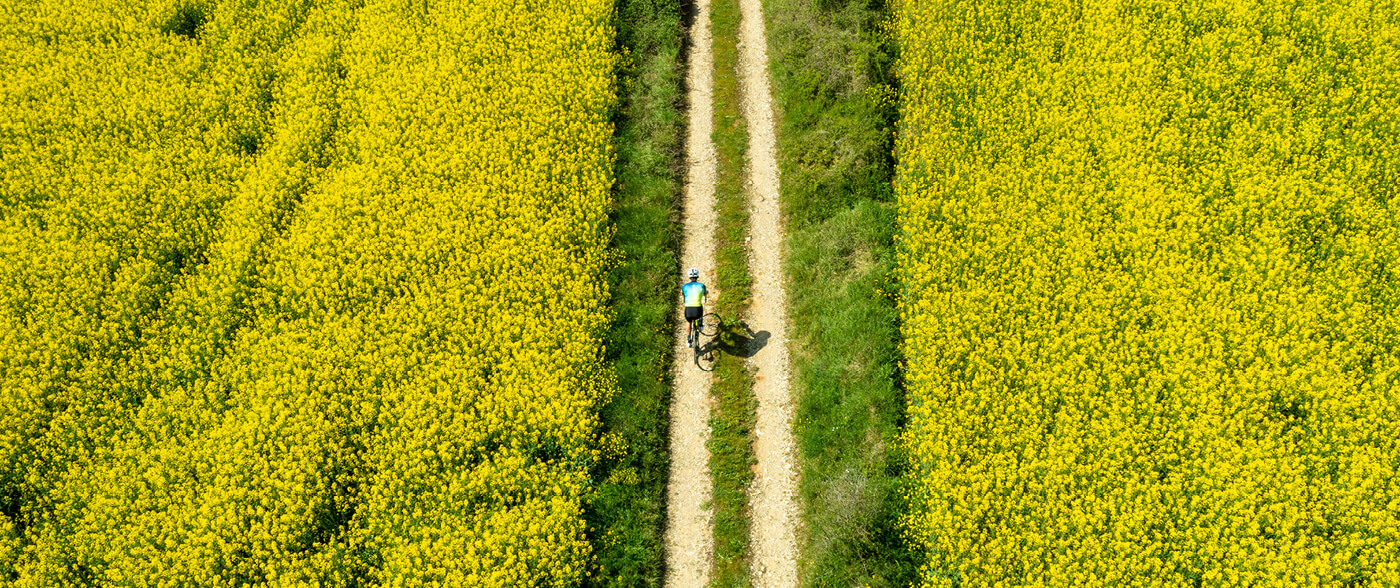
At DuVine Adventures we spend much of our Summers with our guests on bike tours in Europe, several of those bike tours correspond with famous European bicycle races such as, the Tour de France and Giro d’Italia – where we run our specialty tours; The Pyrenees Bike Tour – Tour de France and The Giro d’Italia Bike Tour - So, since the Tour de France will be kicking off this weekend we thought we would share a brief history of bike racing in Europe.

da Vinci bicycle
Leonardo da Vinci first recorded the idea of the ‘bicycle’ with vivid and precise sketches in his Atlantic Code. These sketches contemplated features which are representative of the modern bike such as wheels of the same diameter and pedals.
The bicycle went through several metamorphoses, from the wooden and rigid ‘celerifere’ (1790) to the ‘velocifero’, until finally in 1888, Dunlop invented the pneumatic tires. This major breakthrough also marked the beginning of modern competitive racing. Cycling became very popular in the western European countries of France, Spain, Belgium, and Italy. Some of the earliest bicycle races remain among the sport’s biggest events.
In the ensuing years, road races were held everywhere in Europe: on November 7, 1869 the first long-distance road race between two cities took place. It stretched from L’Arc de Triomphe in Paris to the Cathedral in Rouen and was attended by 304 racers. The first Paris-Rouen race was won by British bicycle racer James Moore, soon to become one of the first cycling stars.

James Moore
Following the Paris-Rouen race, the pace of change in cycling intensified. The same year, the London – Brighton race was born. In 1870, the first Italian road race was held between Florence and Pistoia: 33 km covered in about 2 hours. However, the first ‘classic’ Italian race was the Turin-Milan in 1876: the race was won by Maghetti, who covered 150 km between the two cities. In 1890, another exhausting race was created: the Paris-Brest-Paris: 1260 km non-stop loop, day and night. Finally in 1896, the first real ‘classic’ French race was born: the Paris-Roubaix. While originally it started in Paris and ended in Roubaix, since 1968 the starting city has been Compiègne about 60 km north-east from Paris. Famous for rough terrain and cobblestones, it is one of the “monuments” of the European calendar.
The first international body for racing was the International Cycling Association (ICA), established by Henry Sturmey (the founder of Sturmey-Archer). It opened in 1893 and held its first world championship in Chicago the same year. The ICA was replaced by the Union Cycliste International (UCI) which was set up on 14 April 1900 during the Olympic Games in Paris. The UCI was founded by the national cycling organizations of Belgium, the United States, France, Italy, and Switzerland. It replaced the ICA by setting up in opposition during a row over whether Great Britain should have been allowed just one team at world championships or separate teams representing Scotland, Wales and Ireland. Britain found itself outflanked and it was not able to join the UCI – under the conditions the UCI had imposed – until 1903, just in time to participate in what would become the most prestigious race of the ‘Grand Tours’: Le Tour de France.

vintage Tour de France
Denoted as ‘the most physiologically demanding of athletic events’, the roots of the Tour de France can be traced to the controversial Affair Dreyfus, which divided public opinion in France at the beginning of the 19th century over the innocence of Alfred Dreyfus, a soldier convicted – though later exonerated – of selling military secrets to the Germans. The editor of The Velo, the first and the largest daily sports newspaper in France, believed in Dreyfus’s innocence, while many anti-Dreyfusards opened a rival daily sports paper, L’Auto. Stagnant sales led the editors of L’Auto to come up with an idea of a multi-day bicycle race to surpass its rival. L’Auto announced the race on January 19, 1903, starting in Paris and stopping in Lyon, Marseille, Bordeaux and Nantes before returning to Paris. The first Tour De France was won by Maurice Garin, an Italian chimney sweep, and naturalized French citizen.
Six years after the first Tour the France, thanks to the editor of the main Italian sports newspaper La Gazzetta dello Sport, the second of the Grand Tours, the “Giro D’Italia,” was started. The “Giro” was preceded by the Milan – San Remo, “the Spring Classic” or ‘the sprinter classic’. This annual cycling race between Milan and San Remo was the longest professional one-day race at 298 km. The first was in 1907, when Lucien Petit-Breton won.

2010 Giro d'Italia
Finally, in 1921, the first International World Cycling Championship was organized in Copenhagen, but only in 1927 were professional racers allowed to enter the competition. The first professional World Cycling Championship took place at the Nurburgring, Germany and was won by Alfredo Binda, followed by Girardengo, Piemontesi and Belloni, all racers from Italy.
Inspired by the success of the Tours in France and Italy, and the boost they brought to the circulations of their sponsoring newspapers, the editors of the daily Spanish Informaciones adopted the concept to Spain. La Vuela (the tour of Spain) was first held in 1935 and annually since 1955.
Everything that follows this glorious prelude is written in the history of Racing.

Lance at the 2009 TDF