Once you’ve caught the cycling bug from being on a classic DuVine bike tour or getting ready for something really adventurous like one of our Pro-Series bike tours (which, if you’re reading this, you likely have) you’ll quickly realize that cycling is a year-round sport. Rain or shine, blazing heat or frigid cold, and everything in between, it’s hard to ignore the two-wheeled ticket to open-aired adventure parked in your garage or basement. No matter the weather outside, you can always comfortably enjoy a day on the bike if you master the technique of dressing appropriately for the conditions. Here at DuVine Adventures, we are dedicated to riding our bikes all 12 months of the year, so we know a thing or two about dressing for success, and we want to pass that knowledge onto you so you can enjoy your training and riding as much as you should.
The Good
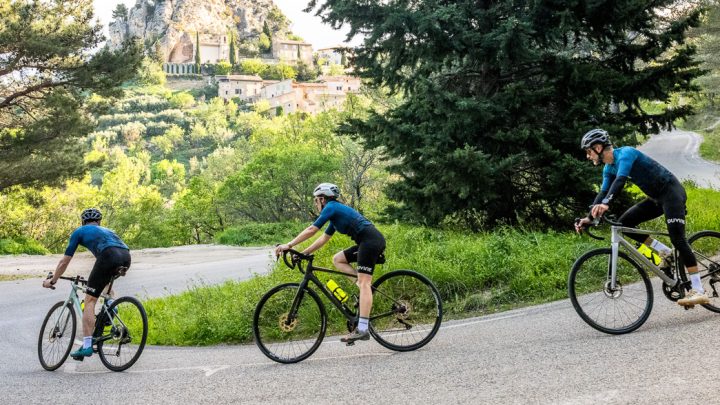
Particularly in the late spring and throughout the summer, dressing for your ride is pretty straightforward. When the sun is out and the temperature is anywhere above 60 degrees, all you usually need is a short sleeve jersey and a pair of shorts and you’re all set. If it’s a little nippy at the start of a ride, you may want to wear a thin sleeveless base layer, or possibly bring along a pair of arm warmers that you can peel off as it warms up later.
In the fall and early spring, when the temperature is a little more brisk, it’s time to accessorize. If it’s in the 50’s, you may want to wear a long-sleeve base layer and possibly a pair of warmers as well if you tend to get cold. A long-sleeve jersey by itself or paired with a sleeveless base layer should also get the job done, though wearing removable layers is always a good idea whenever possible so that you can regulate your temperature with ease throughout the ride. A pair of knee warmers or leg-warmers is definitely a good idea as well, unless you’re particularly warm-blooded. A regular cycling cap will usually do the trick underneath your helmet, and a thin pair of long-fingered gloves should have your digits covered for those nice early and late season rides.
When the temperature dips a bit more into the 40’s, dressing for your ride is still pretty simple, but a few more items should be added to your list of must-haves. For one, a long-sleeve base layer is pretty much requisite, and you will likely want at least a long-sleeve jersey. It’s often nice to wear a regular jersey underneath your uppermost layer as well, both for an added layer of insulation and for the extra pockets it affords you to tote along food and other cool weather accessories. Now is also the time to don a slightly warmer cap like a beanie or skull cap, as well as some mid-weight gloves (nothing too heavy duty, though, as that will only make your hands sweaty and chilly). By now, you will definitely want to have your legs covered with at least a pair of leg warmers, or full length tights if you prefer. Unless your toes tend to get cold easily, regular cycling socks should be fine, but a pair of shoe-covers will make a world of difference in shielding your feet from the cool wind. It’s never a bad idea to stuff some lighter alternatives like thinner gloves or a regular cap into your pocket in case you start to overheat. Then you can swap items later on so that you stay comfortable without having to choose between only too hot or too cold.
The Bad
Unfortunately, in many parts of the world the weather is not idyllic year round. The winter months can be especially harsh, and they do require a little more know-how in order to get out and enjoy your ride. But with the right attire, you can easily tackle sub-freezing temperatures. The most important thing to keep in mind is your core temperature – if it gets too cold, you’re going to be in for a tough day. Start with a tight-fitting and thick base layer, one that you would likely also use for skiing. Make sure it breathes well, though, as you don’t want to get too sweaty, which will only lead to a chill. Next, you may want a short sleeve jersey again, if only for the extra pocket space. If it’s only in the 30’s, a winter cycling jacket should be enough on its own, but if it is below 30 degrees you will probably want to add a long sleeve jersey underneath your jacket. A wind vest on top of everything is also a good addition to shield your chest from the icy wind.
A thick pair of winter tights is a great thing to have as well, but you may find that you are fine with just a pair of leg warmers, or a leg and knee warmers combined. Experiment and see what works best for you. A thin pair of long winter socks will also help to keep both your feet and calves warm. Don’t try to pull on the thickest socks you can find, though, as that will only cut off the circulation to your feet once your shoes are on and will make them even colder. A pair of warm shoe covers is definitely a must now as well. A warm winter cap is also crucial, and if your face and neck tend to get cold you may want to add a balaclava or a neck gator. Either way, you’ll be happy to have something keeping all that warm air from escaping through your helmet. Finally, we can’t emphasize enough the importance of a good pair of warm winter gloves. Either regular fingered gloves or a pair of lobster gloves designed for cycling is definitely what you should look for. These will both keep your digits warm and give you the dexterity you need to shift and brake safely and with ease. There is nothing worse than struggling just to keep your hands on the bars, so don’t skimp here.
The Ugly
Alright, so now you know how to dress for all kinds of temperatures. But what about when other factors like rain and snow come into play? Even if they are less than ideal, neither of these has to stop you from enjoying a day on the bike. In the warmer months, dealing with a little precipitation is as easy as donning a rain cape or a vest. If it’s not raining when you set out but you think it might later on, it’s easy to store a rain jacket in you jersey pocket or, better yet, under your jersey. Simply fold up your jacket so it is as compact as possible, then stuff it up the back of your jersey so that it sits on the small of your back just above your pockets. This ensures that your jacket will stay in place and won’t inhibit access to anything you have in your pockets.
This same advice holds true year round, and you can don a rain jacket over whatever else you are wearing. But when it is both wet and cold outside, there are a few other items you may need. Some neoprene gloves and shoe covers will be a huge boon to your comfort, as they will keep the water out while your hands and feet remain toasty on the inside. Some people like to throw on a pair of water-proof pants for wet rides, but these can often be a bit baggy and flap around in the wind. Instead, before pulling on your leg warmers or tights, apply a layer of embrocation, which is a type of lotion that has a warming effect as you ride, followed by a layer of Vaseline, which will create a protective sheath between your skin and the rain, causing the water to bead up on your legs and helping keep you dryer and warmer for longer.
Whether the weather outside is delightful or frightful, dressing accordingly is integral to your enjoyment of your ride. With these tips in mind, though, you should have no trouble braving the elements throughout the year. Above all, there are two key points to keep in mind:
1. When it’s cool outside, if you’re already warm and toasty before you hit the road, you’re probably going to get too hot as the ride goes on and you start riding harder. The best strategy is to start off just a little cooler than you’d like, as the warmth your body produces while you pedal will heat you up quickly, and before you know it you’ll feel just right.
2. Figure out how to combine different layers so that you’re warm enough when the weather is on the chillier side – say on the descent from a climb – but not melting while you climb to the top. The ability to regulate your body temperature will keep you happy from start to finish.
So, keep on biking year-round with these helpful hints and we will see you on a DuVine bike tour soon!
Related articles
- How to train for a DuVine bicycle trip (duvine.com)
- How Technology Can Help Your Bike Training (duvine.com)
- DuVine Bike Tours in June – Summary Notes from the Road (duvine.com)
- Getting Ready for the Tour de France (duvine.com)
- How I got ready for the Tour de France (duvine.com)