

In 2022 DuVine became the first 100% carbon-neutral bike tour operator. But what exactly does that mean?
At its core, carbon neutrality is about accountability. Each year, we calculate the total CO2 output we produce as a company—from support vans to hotel energy use to day-to-day operations at our offices—and offset those emissions by investing in in verified carbon reduction programs around the world.
It’s a key part of our commitment to sustainable travel. It’s also a complex process. Carbon accounting is full of nuance, and details matter. Without clear standards, it’s easy to blur lines or overstate progress—a practice known as greenwashing. That’s why transparency and independent, third-party verification are essential.
To better understand what meaningful offsetting looks like in practice, we spoke with Court Whelan, Chief Sustainability Officer for our friends at Natural Habitat Adventures.

There’s no such thing as perfect sustainability, but being open to conservation culture is a powerful place to start.
What is Carbon Offsetting?
In simple terms, carbon offsetting is a way to take responsibility for the emissions we can’t otherwise eliminate through energy-efficient transportation or lower-impact operations, and compensate for those emissions by supporting projects that reduce or remove carbon from the atmosphere. The goal is a net-zero result: for every metric ton of carbon we produce, an equivalent amount is reduced. While emissions still occur, they’re not ignored—they’re actively accounted for.
“We would love to decarbonize the travel industry, but the reality is that we can’t eliminate emissions fast enough to abate the climate situation,” says Court. “Instead, we do what we can, when we can, with what we have—and offsetting is a great tool at our current disposal.”

How Does Carbon Offsetting Work?
After adding up all the emissions produced from our trips and operations, we partner with South Pole, a company that identifies and verifies climate action projects for us to support with carbon credits. Since 2022, we’ve invested in carbon reduction projects in a variety of geographic regions, helping to kickstart initiatives that otherwise wouldn’t have had the funds to get off the ground.
Those projects fall into three main categories:
- Nature-Based: Projects that protect natural ecosystems through urban tree planting and reforestation, forest conservation, and regenerative agriculture while supporting local communities.
- Renewable Energy: Working to establish clean energy initiatives—wind farms, solar farms, hydropower, geothermal—that cut emissions while creating jobs and training opportunities.
- Community-Based: Increasing access to clean water and clean cooking solutions to reduce emissions, improve daily life, and reduce pressure on forests.
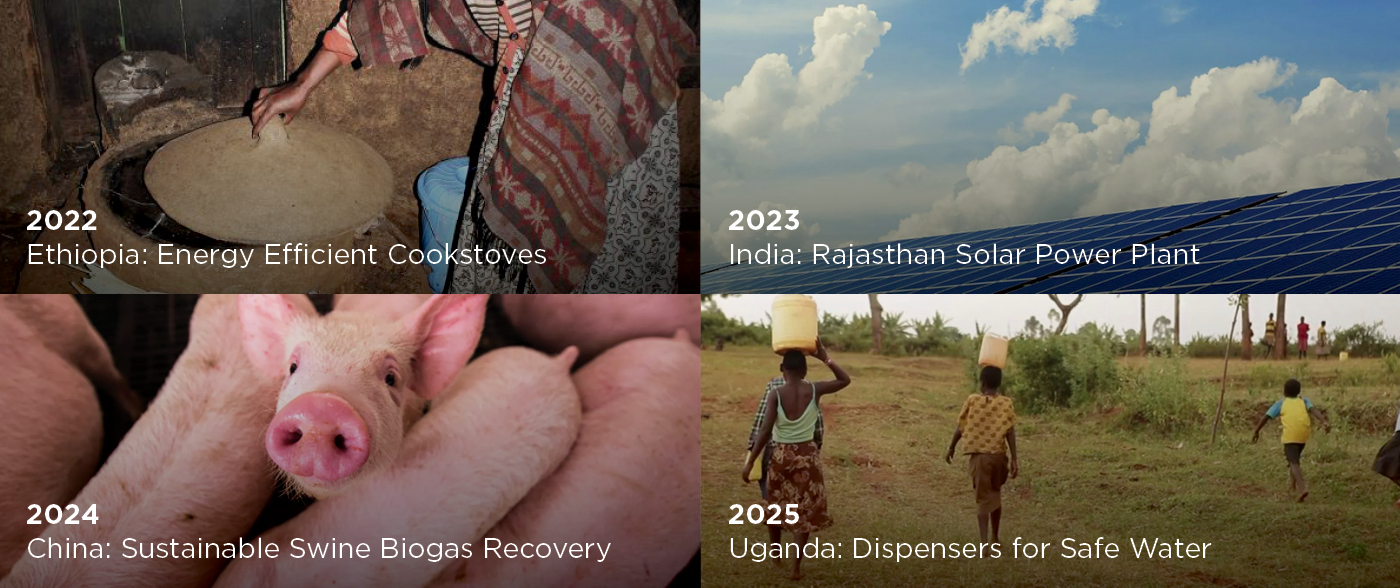
We also team up with our friends at Lindblad Expeditions, Natural Habitat Adventures, and Off the Beaten Path to increase our purchasing power, supporting projects at a scale that can drive long-term change.
“Pooling our efforts allows us to get a better rate on offsets and make a bigger impact,” says Court. “We get to see projects to completion and invest money in projects that wouldn’t otherwise have been started. It’s a win for all.”
We would love to decarbonize the travel industry, but the reality is that we can’t eliminate emissions fast enough. So we do what we can, when we can, with what we have.
Why Verification Matters
Each project we support aligns with the United Nations Sustainable Development Goals (SDGs)—17 interconnected priorities focused on ending poverty, reducing inequity, tackling climate change, and preventing environmental degradation. “They’re guiding principles for what good sustainable development looks like in its truest form,” says Court. “They reflect the big-picture challenges we need to address in order to survive as a species in the long run.” The SDGs encompass a wide range of issues, from clean drinking water and food security to building infrastructure and inclusive societies.
When selecting projects, we prioritize those that check the box on as many SDGs as possible. A project that builds solar power plants in a community reliant on imported fossil fuels doesn’t just combat climate change and create a clean energy source, it also provides education and employment opportunities for local people, leading to economic growth and security.
The projects we invest in are also meticulously monitored using scientific models to determine how much carbon they reduce over time, Court explains. And just as important, projects are independently evaluated by a third-party verification entity to ensure their impact is credible. “It’s kind of like the tax man,” he says. “They come in to make sure you did your math right.”
There’s also the question of greenwashing, which inevitably comes up in conversations about sustainability and carbon offsetting best practices. “The overall idea is transparency, accuracy, and being careful not to overstate positive effects,” says Court. “The ultimate solution is, of course, decarbonization, but it comes back to doing what we can, when we can, with what we have—and offsetting is a great tool at our current disposal.”

Carbon accounting is full of nuance. Without clear standards, it’s easy to overstate progress. That’s why transparency and third-party verification are essential.
Progress Over Perfection
As the saying goes, perfect is the enemy of good. Carbon offsetting isn’t a perfect fix for the climate crisis, but it is a practical one—an actionable step we can take to reduce our impact now while bigger, long-term solutions are developed. “There’s no such thing as perfect sustainability,” says Court. “While carbon offsetting might feel like a band-aid for the climate situation we’re in today, it’s still a solution.”
What’s more, our offsetting efforts help foster a broader culture of sustainability, both among our travel industry peers and our guests. “We have a special superpower in the travel business,” Court says. “Our guests are receptive. That gives us a unique opportunity to talk about what sustainable travel really means and how those choices can carry over into everyday life. Not only is it great to be part of the solution by investing in these projects, we’re also promoting a more conservation-minded culture.”

Steps to Reduce Your Carbon Footprint
Whether it’s carrying a reusable water bottle, reducing waste, or swapping your car for your bike a few times a week, even small efforts can inspire larger cultural and behavioral shifts towards long term change. And over time, mindful sustainability practices become second nature.
Choosing to travel with companies like DuVine that prioritize sustainability is one way to be part of the solution—but it doesn’t stop there. Ask other brands about their practices, support organizations doing meaningful work, and remember that consumer demand can help drive real change.
While DuVine offsets the emissions generated by your trip once it begins, you may also choose to purchase carbon offsets for your flights or other travel throughout the year. Doing so is often more affordable than you might expect. Additionally, tools like UC Berkeley’s CoolClimate Calculator make it simple to estimate your personal carbon footprint and take steps to reduce it.
Making a difference requires curiosity and engagement. “There’s no easy button for sustainability,” Court says. “But being open to conservation culture—and recognizing that doing what you can matters more than doing things perfectly—is a powerful place to start.”


