

Tour Highlights
- Be treated to haute cuisine, local wine pairings, and a Michelin-starred dinner at our exquisite hotel Les Sources de Caudalie
- Bike among world-renowned vineyards, including Château Cheval Blanc, Château Pétrus, Château Mouton Rothschild, and Château Cos d’Estournel (to name just a few)
- Marvel at the monolithic church and picture-perfect shops in the town of Saint-Émilion
- Understand the nuances of area wines during exclusive tastings in subterranean cellars and at top wineries like Château La Dominique, Château Beau-Séjour Bécot, Château Maucaillou, Château Lafaurie Peyraguey, and more
Eat
Foie gras, duck confit, lamb, macarons from Saint-Émilion, and terrines
Drink
Bold and complex Cabernet Sauvignon blends in the Médoc; well-rounded and fruity Merlot blends in Pomerol and Saint-Émilion; sweet Sauternes from Grave
As featured in:


Itinerary
Print Itinerary- Day 1
Welcome to the Médoc!
Your guides will greet you at the Bordeaux train station for a transfer to the heart of the famous Médoc wine appellation district. There’s no better way to begin our week than with a wine tasting and garden picnic at Château Maucaillou, a prestigious sixth-generation family estate After a safety review and bike fitting, our first ride takes us along Bordeaux’s internationally recognized estates, including Château Mouton Rothschild, Château Lafite Rothschild, and Château Cos d’Estournel. With our palates primed for a week of wine tasting, circle back towards Pauillac and settle into our luxurious hotel. Tonight, we’re treated to the first of many memorable dinners together.
Meals: Lunch / Dinner
Destinations: Saint-Julien-Beychevelle, Saint-Estèphe, Pauillac
Accomplished: 19 miles / 32 km, elevation gain: 613 feet / 187 meters
Accommodations: Château Cordeillan-Bages - Day 2
Crossing the Gironde Estuary
Start the day with a dreamy French breakfast before we bid farewell to the left bank of the Gironde estuary. Warm up your legs on a short spin through vineyards heavy with Cabernet Sauvignon grapes and famous château estates. Then board a ferry bound for the right bank and arrive in Blaye, which stands just opposite the river from Pauillac. Back on soil, visit the UNESCO-classified 17th-century Citadel of Blaye and enjoy lunch with a view of the Gironde estuary. Continue cycling into the little-known wine regions of the Côtes de Bourg and round out the afternoon riding into Saint-Laurent-d’Arce. Tonight, our dinner is lovingly prepared at the hotel from garden-fresh produce and ingredients sourced from regional producers. The cherry on top is the domaine’s own wine, made in partnership with Château Angelus—known for their Saint-Émilion Premier Grand Crus.
Meals: Breakfast / Lunch / Dinner
Destinations: Blaye, Bourg, Saint-Laurent-d’Arce, Guîtres, Sainte-Colombe
Accomplished: 22 miles / 40 km, elevation gain: 1,102 feet / 336 meters
Longer option: 32 miles / 53 km, elevation gain: 1,935 feet / 590 meters
Accommodations: Château du Palanquey - Day 3
Exploring Pomerol and Saint-Émilion
Today we’ll ride past some of the most important estates in Pomerol and Saint-Émilion—Cheval Blanc, Beau-Séjour Bécot, Pressac, Petrus, Angélus—and taste velvety reds from the Saint-Émilion appellation. After a tasting at one of the region’s renowned châteaux, bike a few more miles for lunch in the center of Pomerol. Close the loop with a ride back to our hotel to relax and freshen up. This evening, we return to Saint-Émilion to meet our friend and local wine merchant, Benoît. Browse his shop or stroll the town’s charming streets and quaint boutiques, then dine on your own in town or back at the hotel—your guides will gladly recommend their favorite restaurants.
Meals: Breakfast / Lunch
Destinations: Pomerol, Bertin, Montagne, Saint-Émilion, Sainte-Colombe
Accomplished: 24 miles / 39 km, elevation gain: 1,056 feet / 322 meters
Accommodations: Château du Palanquey - Day 4
Through the Entre-Deux-Mers and into Les Graves
After tucking into breakfast, set out on the tranquil bike paths that lead us to the Dordogne River. Here, we’ll cross into the Entre-Deux-Mers region, known for its crisp white Bordeaux wines. The scenery from the saddle includes lush vineyards under endless blue sky, ruins of medieval abbeys, and classic sun-drenched villages. Following a locally sourced picnic lunch prepared by your guides, we near the vineyards of Paysage Bordelais and arrive at the banks of the Garonne river where our hotel is located. Tonight we’ll have the opportunity to taste wines produced directly on-property during dinner at our hotel’s bistro.
Meals: Breakfast / Lunch / Dinner
Destinations: Saint-Émilion, Langoiran, Martillac
Accomplished: 39 miles / 64 km, elevation gain: 1,528 feet / 466 meters
Shorter Option: 26 miles / 42 km, elevation gain: 1,010 feet / 308 meters
Accommodations: Sources de Caudalie - Day 5
Sweet Wine and Bittersweet Farewells
Begin the day with croissants and coffee on the terrace of our hotel, then hop on the bike to reach another stellar wine region—Graves. Pedal through medieval villages that marry French and English architecture en route to Sauternes, the capital of sweet wine. These wines were made to pair with lunch, and we’ll do just that at a favorite Sauternes Château where we’ll learn how the influence of “noble rot” gives Sauternes its tasty notes of honey, caramel, and tropical fruit. This afternoon, challenge yourself and ride all the way back to the hotel, or take a quick transfer back to indulge in some of the hotel’s famous vinotherapy spa treatments. Tonight, it’s time to toast our week together: first with a cocktail in the salon, and finally with a two-Michelin-starred dinner overseen by Chef Nicolas Masse. Bon appétit!
Meals: Breakfast / Lunch / Dinner
Destinations: Martillac, La Brede, Landiras, Sauternes
Accomplished: 27 miles / 44 km, elevation gain: 1,052 feet / 321 meters
Longer Option: 43 miles / 70 km, elevation gain: 2,024 feet / 617 meters
Accommodations: Sources de Caudalie - Day 6
Au Revoir
After breakfast, enjoy a leisurely stroll around the grounds and through the vineyards, or seize the opportunity for a last spin through Bordeaux’s sleepy villages and superior wineries. Then it’s back to the city of Bordeaux, where your guides will see you off to your next destination.
Meals: Breakfast
Destinations: Martillac, Bordeaux
Accomplished: 14 miles / 22 km, elevation gain: 525 feet / 116 meters
DuVine itineraries may be subject to slight route changes, hotel substitutions, and other modifications.
Arrival Details
Airport City: Paris or Bordeaux, France Pick-Up Location: Bordeaux Train Station Pick-Up Time: 10:30 am
Departure Details
Airport City: Paris or Bordeaux, France Drop-Off Location: Bordeaux Train Station Drop-Off Time: 12:00 pm
Arrival and departure details for alternate itineraries and future year departures may be subject to change.
Dates + Availability

- DatesPriceSpecial Events
- Jun 14 – 19$6,495
- Jun 21 – 26$6,495
To reserve call +1 888 396 5383
- Jun 28 – Jul 3$6,495
To reserve call +1 888 396 5383
- Jul 5 – 10$6,195Reserved by a private group
- Jul 12 – 17$6,495
To reserve call +1 888 396 5383
- Jul 26 – 31$6,495Book Now Space is limited!
- Aug 2 – 7$6,395Book Now Space is limited!
- Sep 6 – 11$6,495
- Sep 13 – 18$6,495
- Sep 14 – 19$6,395
- Sep 20 – 25$6,495
- Sep 27 – Oct 2$6,395
- Oct 4 – 9$6,295
- Oct 11 – 16$6,095
- DatesPriceSpecial Events
- Apr 18 – 23$6,495
- Apr 25 – 30$6,495
- May 9 – 14$6,495
- May 16 – 21$6,495
- May 30 – Jun 4$6,495
- Jun 6 – 11$6,495
- Jun 20 – 25$6,495
- Jun 27 – Jul 2$6,495
- Jul 18 – 23$6,495
- Jul 25 – 30$6,495
- Aug 1 – 6$6,495
- Aug 8 – 13$6,495
- Aug 15 – 20$6,495
- Aug 22 – 27$6,495
- Aug 29 – Sep 3$6,495
- Sep 5 – 10$6,495
To reserve call +1 888 396 5383
- Sep 19 – 24$6,495
- Sep 26 – Oct 1$6,495
- Oct 3 – 8$6,495
- Oct 17 – 22$6,495
Inclusions + Details
Accommodations
- Thoughtfully selected accommodations that reveal the true character of the region
- Luggage transfers
Meals
- Daily breakfasts, all lunches, nutritious snacks, and après velo cocktails
- 4 gourmet dinners at our favorite local restaurants and renowned culinary establishments
- Carefully selected local wine, beer, or spirits with every meal
Activities
- Wine tastings and activities as outlined in the tour itinerary
- Entrance fees to historic sites, museums, parks, and all other exclusive events
- Gratuities for baggage, porters, and hotel service
Gear
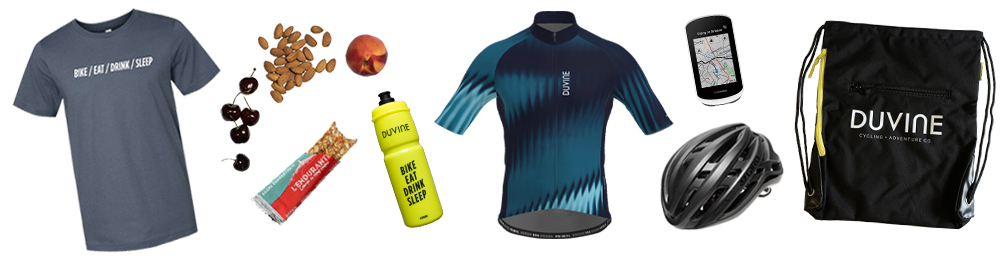
- Top-of-the-line bicycle selection
- Bike helmet
- Complimentary DuVine gear including a custom cycling jersey, DuVine t-shirt, water bottle, and drawstring bag
- GPS with pre-programmed route maps
Support
- Expert bilingual guides with extensive local knowledge
- Support vehicle that follows the day’s route, distributes refreshments, and offers lifts
- Pick-up and drop-off before and after your tour from predetermined meeting points
- Daily bike maintenance to ensure optimal performance

