

Tour Highlights
- Learn the family recipes that have been handed down over generations as you cook with our friend Lina in her 15th-century home
- Spend a night in historic Pienza, a place of architectural heritage named for the Pope who made it his mission to transform the town into an ideal Renaissance city
- Pedal through UNESCO-recognized landscapes of wheat fields where scenes from Gladiator were famously filmed
- Meet Paolo and his mother at their olive mill for a home-cooked lunch and olive oil tasting featuring products grown on the farm
Eat
Hand-rolled pici pasta, pecorino cheese, olio nuovo (fresh-pressed olive oil), truffles, fava beans, artichokes, chestnuts, porcini mushrooms, Chianina beef, and cinghiale (wild boar)
Drink
World-famous wines made from native Sangiovese grapes including Brunello, Chianti Classico, and Vino Nobile; international blends known as Super Tuscans; and—in classic Italian fashion—espresso and cappuccino


Itinerary
Print Itinerary- Day 1
La Dolce Vita
Meet your guides at the Chiusi train station for a transfer to the tiny village of Montefollonico. Here, an authentic Tuscan welcome awaits with lunch on the scenic terrace of a centuries-old olive mill. After, get fitted on your bike and set off on a ride through the classic Tuscan countryside—you’ll feel as though you’ve traveled back to the 13th century pedaling on the cobbled streets of tiny Petroio and greeting locals as they tend their olive groves. Choose your own adventure with longer or shorter ride options that lead to our boutique hotel in the heart of Pienza, tucked in amongst the town’s Renaissance architecture. This evening, watch the sun set over the Tuscan hills as we dine al fresco on the terrace of a local organic farm.
Meals: Lunch / Dinner
Destinations: Pienza, Petroio
Accomplished: 19 miles / 29 km, elevation gain: 1,919 feet / 585 meters
Shorter Option: 14 miles / 22 km, elevation gain: 1,332 feet / 406 meters
Accommodations: La Bandita Townhouse - Day 2
Montalcino: Castles, Brunello, and Home-Cooking
Set off riding through the Val d’Orcia, an area so beautiful that UNESCO designated it a World Heritage Site—you may also recognize it from the movie Gladiator’s famous wheat field scene. Climb up to the craggy medieval fortress of Castiglione for a coffee stop (a key component of Italian cycling culture), then enjoy an endless downhill through the olive groves. The final push brings us to our favorite Brunello winery, where the reward for our efforts is a gorgeous tasting lunch. Spend the afternoon relaxing by the pool or getting pampered at the spa of our five-star castle hotel. This evening we’ll head into Montalcino for a cooking class and dinner in the 15th-century home of our friend Lina.
Meals: Breakfast / Lunch / Dinner
Destinations: Montichiello, Castiglione d’Orcia, Montalcino
Accomplished: 24 miles / 39 km, elevation gain: 2,247 feet / 685 meters
Longer Option: 38 miles / 62 km, elevation gain: 3,487 feet / 1,063 meters
Accommodations: Castello di Velona - Day 3
Hilltown Loop
Today’s loop ride begins with a climb to Montalcino on a route lined with prestigious vineyards. Follow in the footsteps of Roman legions, popes, and emperors as we pedal along the ancient Via Cassia into medieval San Quirico. Soak up the atmosphere in the main piazza before continuing along a scenic ridgeline to our friend Paolo’s olive mill for lunch cooked by his mother and a tasting of organic olive oil. After lunch, enjoy a relaxed spin into the Asso Valley (home to Italy’s rare white truffles). From here, complete the full loop ride or take a quick shuttle back to the hotel. This evening, treat yourself to some rest and relaxation at the pool and spa before another satisfying dinner.
Meals: Breakfast / Lunch / Dinner
Destinations: Montalcino, San Giovanni d’Asso, Castelmuzio, San Quirico
Accomplished: 38 miles / 61 km, elevation gain: 2,893 feet / 1,032 meters
Longer Option: 50 miles / 81 km, elevation gain: 4,720 feet / 1,439 meters
Accommodations: Castello di Velona - Day 4
Across the Crete Senesi: Monks and Masterpieces
Say goodbye to the Castello di Velona as we ride through the mystical morning light that bathes the Romanesque Abbey of Sant’Antimo. Pedal across the Brunello region before we stop to visit the Renaissance frescoes at the Abbey of Monte Oliveto. Crossing into Chianti Classico country, the views turn positively panoramic, and we’ll pedal through the wide-open landscapes of the Crete Senesi to a well-earned lunch at a family-run winery. Tonight, spend the evening in Siena as you wish: dine on your own, explore the medieval city, or have dinner right at our hotel.
Meals: Breakfast / Lunch
Destinations: Buonconvento, Monte Oliveto, Asciano, Siena
Accomplished: 29 miles / 46 km, elevation gain: 2,083 feet / 635 meters
Longer Option: 48 miles / 77 km, elevation gain: 3,972 feet / 1,211 meters
Accommodations: Borgo San Felice or Le Fontanelle - Day 5
Chianti Classico: The Tuscan Heartland
Olive and cypress trees surround us as we ride deep into the hills of Chianti. We’ll see plenty of fortified hamlets and castles—relics of Florence and Siena’s 300-year struggle for regional dominance and ownership over the birthplace of Chianti Classico wines found in ancient cellars around the area. Pedal past countless estates as we weave our way through forests and vineyards, completing our loop for lunch back at the hotel. Enjoy a relaxed afternoon at the pool or spa before regrouping for a final dinner with our friend Serena featuring top wines and generous Tuscan hospitality.
Meals: Breakfast / Lunch / Dinner
Destinations: Castelnuovo, Brolio, Castagnoli
Accomplished: 31 miles / 50 km, elevation gain: 2,673 feet / 815 meters
Longer Option: 40 miles / 64 km, elevation gain: 3,575 feet / 1,090 meters
Accommodations: Borgo San Felice or Le Fontanelle - Day 6
Ride to Florence
On our last day, choose between a late morning at the hotel or ride all the way across Chianti for a triumphant finish in Florence’s Piazzale Michelangelo. Whether you rode here or took a transfer, we say our goodbyes with the stunning Florentine skyline as our backdrop as guides see you off to your next adventure.
Meals: Breakfast
Destinations: Radda, Panzano, Florence
Optional Ride: 36 miles / 58 km, elevation gain: 2,270 feet / 692 meters
Longer Option: 48 miles / 78 km, elevation gain: 3,611 feet / 1,101 meters
DuVine itineraries may be subject to slight route changes, hotel substitutions, and other modifications.
Arrival Details
Airport City: Rome or Florence, Italy Pick-Up Location: Chiusi Train Station Pick-Up Time: 11:00 am
Departure Details
Airport City: Rome or Florence, Italy Drop-Off Location: Florence Piazzale Michelangelo Drop-Off Time: 1:30 pm
Arrival and departure details for alternate itineraries and future year departures may be subject to change.
Dates + Availability

- DatesPriceSpecial Events
- Jun 14 – 19$6,895
To reserve call +1 888 396 5383
- Jun 15 – 20$6,795
To reserve call +1 888 396 5383
- Jun 21 – 26$6,695
To reserve call +1 888 396 5383
- Jun 28 – Jul 3$6,595
To reserve call +1 888 396 5383
- Jul 26 – 31$6,495
- Aug 9 – 14$6,495
- Aug 23 – 28$6,495
- Aug 30 – Sep 4$6,895
Limited space. To reserve call +1 888 396 5383
- Aug 31 – Sep 5$6,795
- Sep 6 – 11$6,995
- Sep 13 – 18$6,995
- Sep 20 – 25$7,095
- Sep 21 – 26$7,095
- Sep 27 – Oct 2$6,995
To reserve call +1 888 396 5383
- Sep 28 – Oct 3$6,895
- Oct 4 – 9$6,995Book Now Space is limited!
- Oct 11 – 16$6,995
To reserve call +1 888 396 5383
- Oct 18 – 23$6,895
To reserve call +1 888 396 5383
- Oct 25 – 30$6,895
To reserve call +1 888 396 5383
- DatesPriceSpecial Events
- Apr 11 – 16$6,895
- Apr 18 – 23$6,895
- Apr 25 – 30$6,795
- May 9 – 14$6,895
- May 16 – 21$6,895
- May 23 – 28$6,795
- May 30 – Jun 4$6,995
- Jun 6 – 11$6,995
- Jun 13 – 18$6,895
- Jun 20 – 25$6,895
- Jun 27 – Jul 2$6,995
- Jul 4 – 9$6,895
- Jul 11 – 16$6,895
- Jul 25 – 30$6,895
- Aug 8 – 13$6,895
- Aug 22 – 27$6,895
- Aug 29 – Sep 3$6,995
- Sep 5 – 10$6,995
- Sep 19 – 24$6,995
- Oct 3 – 8$6,995
- Oct 10 – 15$6,995
To reserve call +1 888 396 5383
- Oct 24 – 29$6,895
To reserve call +1 888 396 5383
Inclusions + Details
Accommodations
- Thoughtfully selected accommodations that reveal the true character of the region
- Luggage transfers
Meals
- Daily breakfasts, all lunches, nutritious snacks, and après velo cocktails
- 4 gourmet dinners at our favorite local restaurants and renowned culinary establishments
- Carefully selected local wine, beer, or spirits with every meal
Activities
- Wine tastings and activities as outlined in the tour itinerary
- Entrance fees to historic sites, museums, parks, and all other exclusive events
- Gratuities for baggage, porters, and hotel service
Gear
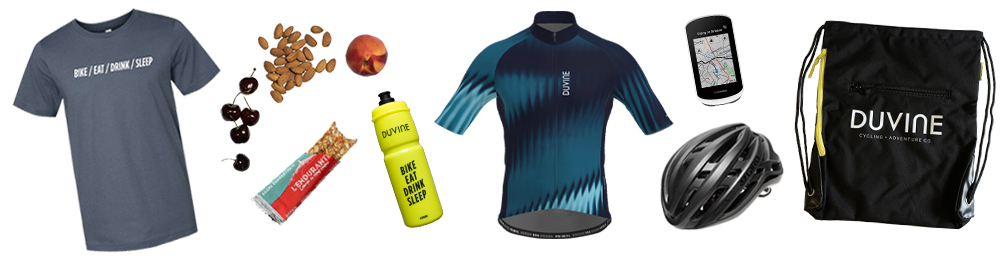
- Top-of-the-line bicycle selection
- Bike helmet
- Complimentary DuVine gear including a custom cycling jersey, DuVine t-shirt, water bottle, and drawstring bag
- GPS with pre-programmed route maps
Support
- Expert bilingual guides with extensive local knowledge
- Support vehicle that follows the day’s route, distributes refreshments, and offers lifts
- Pick-up and drop-off before and after your tour from predetermined meeting points
- Daily bike maintenance to ensure optimal performance

