Tour Highlights
- Discover castle ruins hidden in the green hills of Vysočina and pick fresh fruit from route-side trees
- Stroll the UNESCO-protected Pálava Hills that look out over three countries, then bike the former Iron Curtain patrol roads for a pointed lesson in Cold War history
- Visit the red-roofed artist enclave of Mikulov, at one time an important center of Judaism in Central Europe
- Ride to important vineyards in the Wachau Valley and sample ultimate expressions of Grüner Veltliner and Austrian Riesling
Eat
Fusion cuisine, sweet and savory dumplings, regional cheeses like hermelín, pečená kachna (roast duck), and strudel
Drink
Outstanding pilsners, local wine including Grüner Veltliner and Blaufränkisch, and non-alcoholic št’ávas (fresh drinks from regional fruits)
As featured in:


Itinerary
Print Itinerary- Day 1
Welcome to the Czech Highlands
Meet your guides in Prague for a transfer to the fabulous Chateau Herálec, where we’re treated to a brief tour of the castle upon arrival. After a bike fitting and safety talk, we’ll head out for a warm-up ride on the tree-lined country roads of the Highlands region and through small villages clustered within the wide-open landscape. Your guides will get to know your riding level and bike comfortability with mixed-surface riding, adjusting your routes accordingly. Back at the hotel, enjoy a light lunch then spend some time enjoying the property: stroll the grounds, stake out a place by the swimming pool, or treat yourself to a massage at the hotel’s L’Occitane spa. Tonight, we’ll visit the Bernard Family Brewery to hear the story of its visionary owners and celebrate the week ahead with crisp Bohemian lagers and dinner in the brewery restaurant.
Meals: Lunch / Dinner
Destinations: Bohemian-Moravian Highlands, Herálec
Accomplished: 15 miles / 25 km, elevation gain: 1,086 feet / 331 meters
Accommodations: Chateau Herálec - Day 2
Castles and Glassblowers
This morning, ride into the rolling countryside while marveling at ever-changing views of the iconic 14th-century Lipnice fortress. After a breathtaking descent to the romantic Sázava River, we’ll join up with a newly built bike trail that snakes all the way through this beautiful region. Following the river, we arrive in Světlá nad Sázavou, the epicenter of the Czech glassmaking industry, where we’ll visit an award-winning glassworks. Meet some of the glass masters and discover how centuries-old techniques are still used to shape Bohemian crystal into works of art. After, lunch awaits at Chateau Světlá nad Sázavou, a Renaissance-era castle on the banks of the Sázavou River. Finish the day with a final climb or choose to hop in the van and head back our hotel. This evening, we’ll regather for a dinner of contemporary Czech cuisine in the hotel’s elegant restaurant.
Meals: Breakfast / Lunch / Dinner
Destinations: Bohemian-Moravian Highlands, Lipnice, Humpolec, Světlá
Accomplished: 37 miles / 60 km, elevation gain: 2,989 feet / 911 meters
Accommodations: Chateau Herálec - Day 3
Iron Curtain Roads + UNESCO Palaces
This morning we head south to Moravia, the vinous heart of the Czech Republic. Get comfortable in the van for a scenic transfer of roughly one hour and fifty minutes. Today’s ride takes us into the Lednice-Valtice Cultural Landcape, a stunning World Heritage Site on the border of Austria and Slovakia. Weave through vineyard roads to the original lands of the noble Lichtenstein family in Lednice and pause to visit UNESCO-protected royal palaces. After lunch, continue cycling on the former patrol roads of the Iron Curtain—a poignant reminder of life under communist rule. In the late Renaissance town of Mikulov we’ll meet Petr—one of the Czech Republic’s foremost wine experts—for an evening of Czech winemaking history and a tasting right in the cellar. Our day comes to a close with a memorable dinner in a former synagogue, set in the heart of Mikulov’s historic Jewish quarter.
Meals: Breakfast / Lunch / Dinner
Destinations: Palava Hills, Lednice, Mikulov
Accomplished: 25 miles / 40 km, elevation gain: 1,385 feet / 422 meters
Accommodations: Hotel Volarik - Day 4
Kamptal Palaces, Wines, and Heurigen
Choose to sleep in this morning and have a leisurely breakfast or join your guides for a visit to one of the most important Jewish cemeteries in Central Europe. Today we bid the Czech Republic farewell and transfer to Austria’s Kamptal region, famous for its Grüner Veltliner and Riesling wines. Beginning at the Kamptal’s Château Grafenegg—known for classical music concerts and festivals—cycle through vineyards and villages en route to Langenlois, Austria’s largest wine-producing village and home of the modern Loisium wine center. Once we’ve visited the tasting rooms of renowned biodynamic wineries and family vintners, it’s time to pedal along the Danube to the ancient town of Krems. We’ll reach the medieval village of Dürnstein and our home for the next two nights, a renovated 13th-century convent furnished with works of art from the region. Dine on your own tonight in Dürnstein—your guides are glad to make a restaurant recommendation.
Meals: Breakfast / Lunch
Destinations: Grafenegg, Langenlois, Krems, Dürnstein
Accomplished: 23 miles / 37 km, elevation gain: 590 feet / 180 meters
Longer Option: 31 miles / 46 km
Accommodations: Hotel Richard Löwenherz - Day 5
The UNESCO Wachau Valley
Today we explore the breathtaking Wachau Valley, another UNESCO World Heritage Site. Our ride begins right from the hotel and travels through charming medieval villages and wineries where vines cascade off terraced mountains, almost tumbling into the river. Arrive in Melk where we will visit the remarkable monastery perched over the River Danube. Return via the Danube’s right bank for a quieter perspective and try some family-made Marillenschnaps on the final push. A scenic ferry ride brings us back to the hotel before dinner at a family-run gastronomic restaurant, one of the greatest in Austria.
Meals: Breakfast / Lunch / Dinner
Destinations: Wachau Valley, Dürnstein, Spitz, Melk
Accomplished: 36 miles / 58 km, elevation gain: 1,148 feet / 350 meters
Accommodations: Hotel Richard Löwenherz - Day 6
Krems to Vienna
We cap off our adventure in Austria with a hike to the ruins of Dürnstein Castle, where Richard the Lionheart was held prisoner. At the top, we’re rewarded with a staggering view of the Danube River framed by cascading vineyards, red-roofed villages, and verdant countryside. There’s time for one last stroll through the fairytale streets back in Dürnstein before your guides transfer you to Austria’s capital of Vienna and see you off to enjoy the “City of Music.”
Meals: Breakfast
Destinations: Dürnstein, Vienna
Accomplished: 2 miles / 3 km hiking
DuVine itineraries may be subject to slight route changes, hotel substitutions, and other modifications.
Arrival Details
Airport City: Prague, Czech Republic Pick-Up Location: Andaz Prague Pick-Up Time: 9:00 am
Departure Details
Airport City: Vienna, Austria Drop-Off Location: Praterstern Train Station Drop-Off Time: Between 12:00–1:00 pm
Arrival and departure details for alternate itineraries and future year departures may be subject to change.
Travelers Take Note
To show you all our favorite parts of the Czech Republic and Austria, this tour includes transfers on multiple occasions. We like to think of it as an opportunity to see more of the country en route to your next ride.
As a country, the Czech Republic is focused on energy efficiency. As a result, air conditioning may not be standard in hotels.
Moisture-wicking clothing or daypacks are recommended, but not required.
To show you the most on your tour and to avoid high-traffic areas there is occasional gravel riding on tour. Gravel surfaces are not as uniform as a typical paved road, however, they are generally very smooth. The bikes on this tour are designed specifically for all the surfaces we encounter on tour.
Dates + Availability

- DatesPriceItinerary Unique departure details belowAvailability
- May 16 – 21$6,295
- May 23 – 28$6,295
- May 30 – Jun 4$6,295
- Jun 6 – 11$6,295
- Jun 20 – 25$6,295
- Jun 27 – Jul 2$6,295
- Jul 4 – 9$6,295
- Jul 25 – 30$6,295
- Aug 15 – 20$6,295
- Sep 5 – 10$6,295
- Sep 12 – 17$6,295
- Sep 19 – 24$6,295
- Sep 26 – Oct 1$6,295
Inclusions + Details
Accommodations
- Thoughtfully selected accommodations that reveal the true character of the region
- Luggage transfers
Meals
- Daily breakfasts, all lunches, nutritious snacks, and après velo cocktails
- 4 gourmet dinners at our favorite local restaurants and renowned culinary establishments
- Carefully selected local wine, beer, or spirits with every meal
Activities
- Wine tastings and activities as outlined in the tour itinerary
- Entrance fees to historic sites, museums, parks, and all other exclusive events
- Gratuities for baggage, porters, and hotel service
Gear
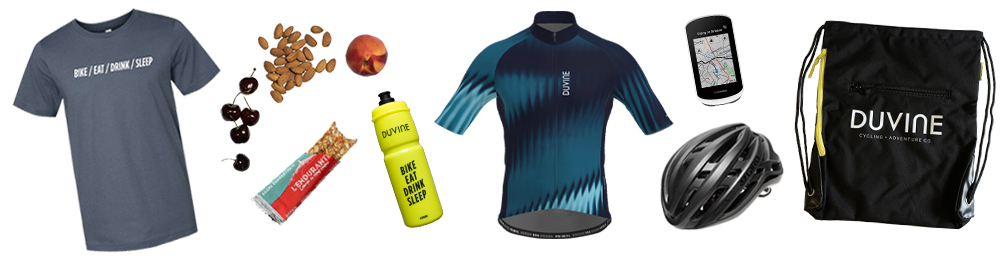
- Top-of-the-line bicycle selection
- Bike helmet
- Complimentary DuVine gear including a custom cycling jersey, DuVine t-shirt, water bottle, and drawstring bag
- GPS with pre-programmed route maps
Support
- Expert bilingual guides with extensive local knowledge
- Support vehicle that follows the day’s route, distributes refreshments, and offers lifts
- Pick-up and drop-off before and after your tour from predetermined meeting points
- Daily bike maintenance to ensure optimal performance